










By News Maker in Abuja
The Nigeria Security and Civil Defence Corps (NSCDC) has launched a fresh security training drive, bringing women operatives and hundreds of tertiary institution security chiefs into a new strategy aimed at preventing threats before they escalate.
The initiative, unveiled in Abuja, combines specialised training for the Corps’ Female Special Force (FSF) with a four-day Campus Security Management workshop for 600 Chief Security Officers drawn from tertiary institutions across Nigeria’s 36 states and the Federal Capital Territory.
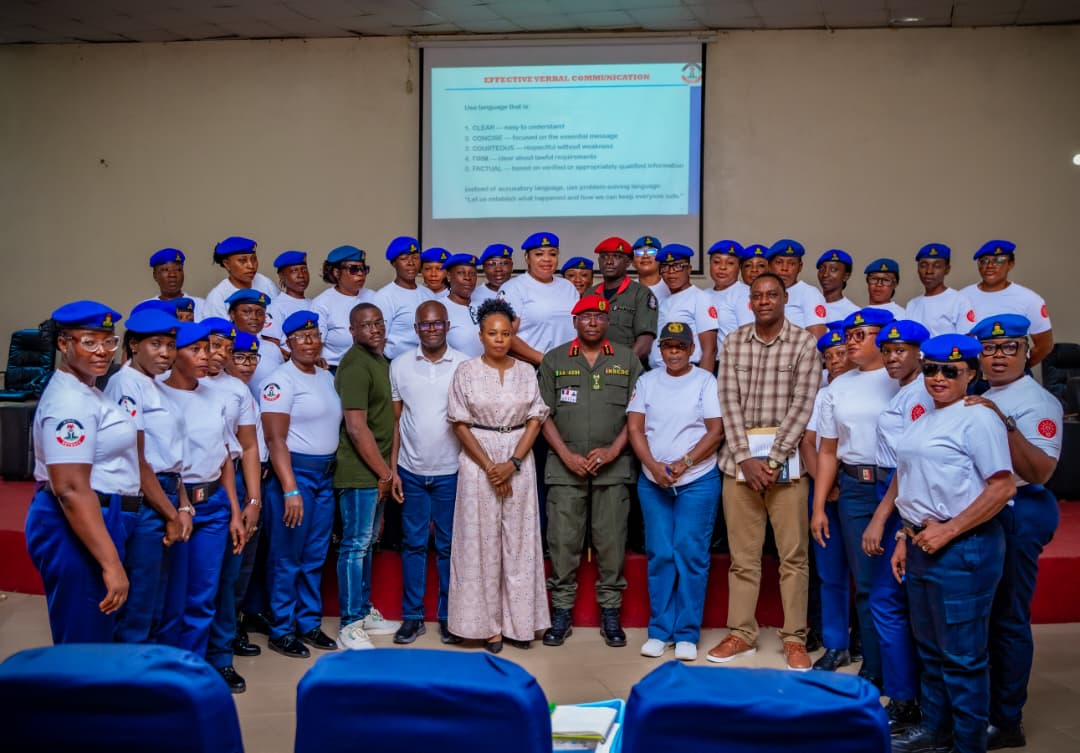
Declaring the FSF capacity-building workshop open, NSCDC Commandant General Prof. Ahmed Abubakar Audi, mni, OFR, stressed that women have a vital role to play in intelligence gathering, conflict prevention, peacebuilding and the protection of national security.
Audi said the programme reflected the principles of UN Security Council Resolution 1325 and the NSCDC Gender Policy, which seek greater gender inclusion, equal opportunities and the effective deployment of women in security operations.
The National Commander of the Female Special Force, ACC Imonikhe Oluwakemi, said the unit was determined to strengthen its role in protecting Critical National Assets and Infrastructure, particularly through improved intelligence and evidence-based operational decision-making.
At another security-focused event in Abuja, Audi opened the specialised Campus Security Management workshop organised in partnership with the International Academy for Gender and Peace and supported by TETFUND.
The Commandant General identified cultism, violent extremism, kidnapping, gender-based violence, cybercrime, drug abuse and campus unrest among the growing threats capable of disrupting academic institutions and endangering students and staff.
He further warned that the campus environment could become a breeding ground for wider criminal activities, observing that some individuals who later engage in serious crimes such as banditry and kidnapping may begin their criminal journey within tertiary institutions.
IAGP President and Course Director, Prof. Frederick Terhemba Tyoor, said the training would help participants identify vulnerabilities, generate actionable intelligence and neutralise security threats before they materialise. TETFUND, represented by Dr. Yusuf Gamawa, also pledged continued support for safe learning environments.
The two programmes reflect a shift towards preventive and intelligence-led security within the NSCDC, with experts from security agencies and academia contributing to the training. Goodwill messages came from the Nigerian Army, Police, Immigration Service and Federal Fire Service, while outstanding state commanders from Benue, Kebbi, Edo and Bayelsa received performance awards.