







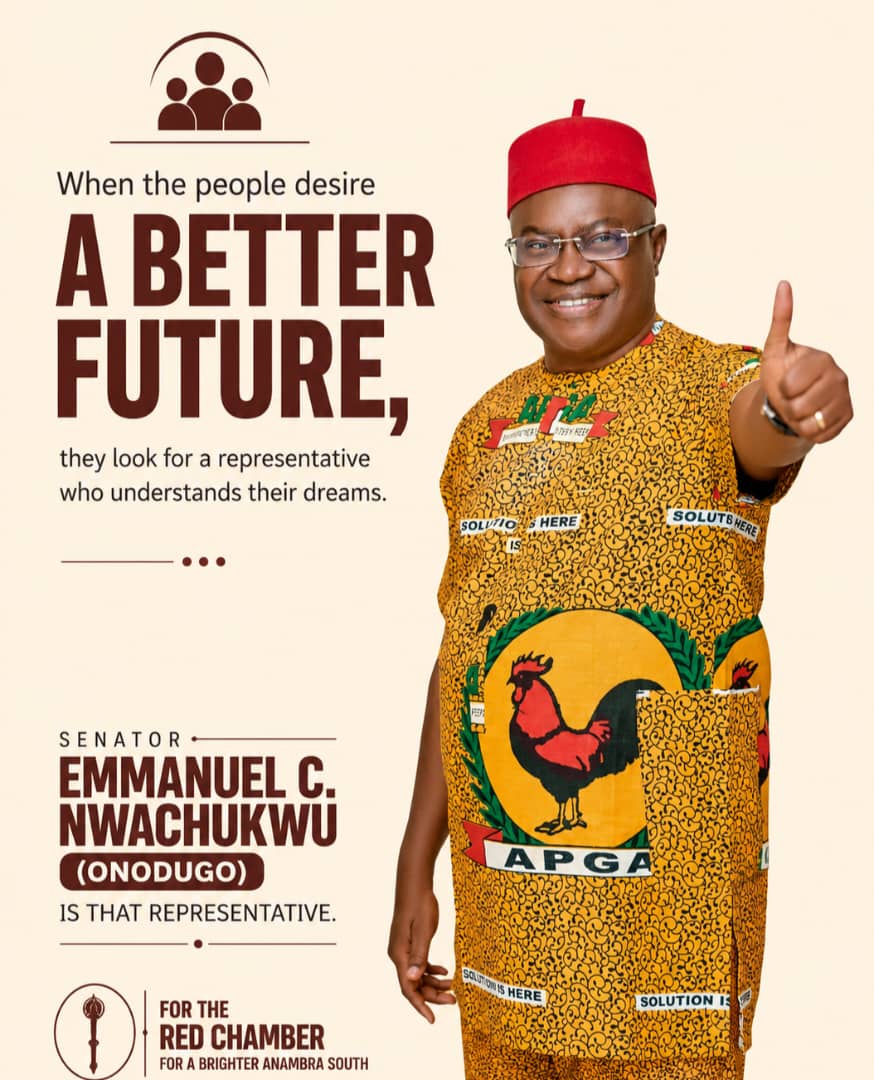
As 2027 approaches, the campaign team of Senator Emmanuel Nwachukwu, popularly known as Onọdụgo, has made its demand clear: reelect the man. Their argument rests on one question — “Why change him, when he is performing?” For voters in Anambra South, that question will define the next election. This analysis by Ekuson Nw’Ogbunka, Our Managing Editor on Wednesday, weighs the Senator’s record so far against the expectations of the district, to determine if the call for continuity is justified, or if it’s time for a new direction.
The Core Argument for Continuity
The campaign’s central message is performance-based. They argue that representation is not about promises but delivery. According to them, an accessible, responsive, and purposeful Senator should be rewarded with another term. The pitch frames Nwachukwu not as a politician seeking office, but as a servant who has used public office for service, not self-interest.
Onọdụgo’s Record: Voice and visibility in Abuja
Since assuming office, Senator Nwachukwu has positioned himself as a strong voice for Anambra South. Supporters say he has championed policies that promote development and ensured the district’s concerns are raised at the national level. For a zone that often complains of being overlooked, having a Senator who is heard in decision-making circles is considered a key asset.
Constituency Interventions and Welfare Programs
The campaign highlights strategic interventions across the seven LGAs. These include youth and women empowerment programs, support for education and healthcare, infrastructure projects, and direct community development initiatives. The claim is that these are not token gestures, but tangible results aimed at improving daily living.
Accessibility and Grassroots Connection
One consistent praise from constituents is accessibility. Unlike the stereotype of an Abuja Senator, Onọdụgo is presented as one who remains connected to the grassroots. The campaign argues this closeness allows him to understand local problems and respond faster, which they say reflects both dedication and compassion.
The “Proven Performance” Narrative
The team’s language is deliberate: “tested experience,” “selfless service,” and “impactful development.” They are asking voters to “consolidate progress” and “write the next chapter of purposeful representation.” The message is that changing leadership now would disrupt ongoing projects and waste political capital already built in the Senate.
Testing the Claims: What Can Be Verified?
A balanced assessment must ask for specifics. Which bills has he sponsored or co-sponsored? What federal projects has he attracted and completed? How many beneficiaries have the empowerment programs reached, and with what funding source? Without verifiable data, “tangible results” risks becoming campaign rhetoric rather than evidence.
The Limits of a First Term
First-term Senators often face a learning curve in the National Assembly. Committee placement, seniority, and budget cycles all affect delivery. Critics may argue that 4 years is too short to judge full impact, while supporters will say that even within that time, the foundation for greater things has been laid. The 2027 vote will test which view voters accept.
The Counter-Argument: Case for change
Not everyone in Anambra South is satisfied. The typical arguments against incumbents include: slow pace of federal projects, unfulfilled campaign promises, and the need to rotate opportunities. Some constituents will also ask if “accessibility” has translated to measurable improvement in roads, jobs, and security. The campaign must address these doubts directly.
Political Context and the 2027 Field
Reelection is never automatic. Other candidates within and outside his party are likely to test his popularity. Issues like zoning, party primaries, and voter fatigue will play a role. The demand for his reelection assumes that performance alone will carry him, but Nigerian elections are also about structure, money, and alliances.
The Senator’s Own Words
In campaign statements, Nwachukwu says: “Every meaningful journey deserves a strong finish. The mandate entrusted to me will continue to produce results.” He insists his focus “has never shifted” and promises to “keep building our district” with credibility and selfless purpose. This sets a clear benchmark voters can use to hold him accountable.
What Anambra South Needs in the Next Four Years
Beyond personality, the district needs specific outcomes: completion of federal roads, improved primary healthcare, more job opportunities for youths, and better support for SMEs and agriculture. The critical question is not just what has been done, but what the plan is for the next term. Can he move from interventions to systemic impact?
Conclusion: Performance vs potential
The campaign team’s demand is simple: reward performance. Senator Nwachukwu’s team has made a case rooted in accessibility, welfare programs, and a promise of consolidation.
But a balanced assessment demands that voters also ask hard questions: What exactly has changed in my community? What is the plan for the next term? And are there better alternatives?
Why Change Him, When He Is Performing?” is a fair question. The answer will depend on whether Ndi Anambra South believe his performance so far merits another four years, and whether his vision for the next chapter is convincing enough to earn their renewed mandate.