







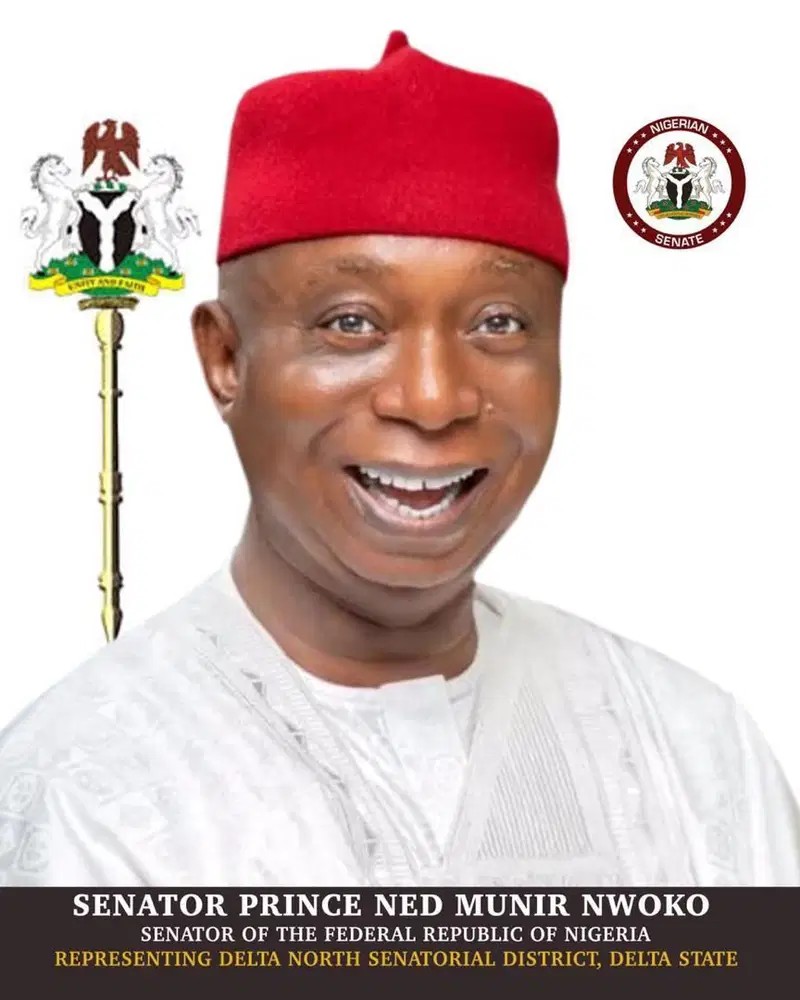
In this feature, Abba-Eku Onyeka examines Senator Ned Nwoko’s legislative record, spotlighting his advocacy for the creation of Anioma State and his broader push for reforms in the National Assembly. Excerpts.
Senator Ned Nwoko, representing Delta North Senatorial District at Nigeria’s 10th Senate, has emerged as one of the most outspoken voices in the Red Chamber, combining legislative activism with a relentless push for equity in Nigeria’s geopolitical structure. Since his inauguration, the Delta-born lawmaker has leveraged motions, bills, and debates to spotlight both local and national concerns.
At the core of Nwoko’s legislative agenda is his demand for the creation of Anioma State. He argues that carving out Anioma from Delta State will correct a long-standing imbalance by giving the South East a sixth state, like other geopolitical zones. He has consistently framed the agitation not as ethnic expansionism, but as a constitutional and justice-driven quest for balance.
The senator has sponsored a bill seeking the creation of Anioma State, which he insists will unlock more federal representation for the area. He often notes that a new state would mean additional senators, House of Representatives members, and other federal opportunities for a people he describes as historically under-represented despite their population and contributions.
Nwoko’s argument hinges on parity. While the North West has seven states, and other zones six, the South East has five. He maintains that Anioma, largely Igbo-speaking and culturally aligned with the South East, is the most logical option to complete the zone. His presentations on the floor have tied the demand to national unity and fairness.
Beyond Anioma, Nwoko has been active in motions addressing insecurity, youth unemployment, and environmental degradation in Delta North. He has raised the plight of communities affected by flooding along the River Niger basin and called for urgent federal intervention and ecological funding for affected local government areas.
On the economy, the senator has contributed to debates on diversifying Nigeria’s revenue base. He has advocated for stronger legislative backing for solid minerals development, tourism, and education-driven entrepreneurship, often citing his private investments in Delta as examples of what is possible with enabling policies.
Nwoko’s legislative footprint also includes bills and motions on health and social welfare. He has pushed for improved primary healthcare funding and has been a vocal supporter of the Student Loan Act, urging strict implementation to ensure children of low-income families in Delta North benefit without bureaucratic bottlenecks.
In the area of anti-corruption and asset recovery, Nwoko has drawn on his background as a lawyer who previously championed the Paris Club refund to states and local governments. In the Senate, he has called for transparency in recovered assets and for a legal framework that ensures such funds directly impact education, health, and infrastructure.
His contributions to debates on national security have been sharp. He has urged a multi-pronged approach combining military action with economic empowerment in flashpoints, warning that poverty and exclusion remain major drivers of unrest. He has specifically demanded better equipment and welfare for troops in the Niger Delta axis.
Nwoko has also intervened on infrastructure. Through motions and oversight engagements, he has demanded accelerated work on key federal roads linking Delta North to Anambra and Edo, arguing that the zone’s agrarian economy cannot thrive without motorable highways and bridges to move goods to markets.
The senator’s style is often described by colleagues as passionate and data-driven. He frequently backs his arguments with research, drawing from local consultations in the nine local government areas of Delta North. His office holds periodic town halls, which he says shape his motions and constituency projects.
Critics, however, point to his first stint in the House of Representatives in 1999–2003, arguing that his current activism must translate into measurable federal presence in Delta North. Supporters counter that his private investments, including a university in the district, show commitment beyond politics and have already created jobs for constituents.
On the Anioma State bill, Nwoko has intensified lobbying among his colleagues and socio-cultural groups. He has met traditional rulers and stakeholders across Delta North to build consensus, insisting that the statehood demand is non-partisan and rooted in development, not personal ambition.
Within the 10th Senate, he has aligned with caucuses pushing for constitutional amendment, using every debate on restructuring and devolution to re-table the South East’s state imbalance. He insists that Nigeria cannot preach federal character while sustaining structural shortfalls that breed agitation.
As the Senate moves into its midterm, constituents and observers are watching whether Nwoko’s blend of advocacy, legislation, and private-sector experience will deliver both the Anioma State dream and tangible federal projects. For now, he remains Delta North’s loudest voice on the floor, fusing senatorial duties with a historic equity campaign.