




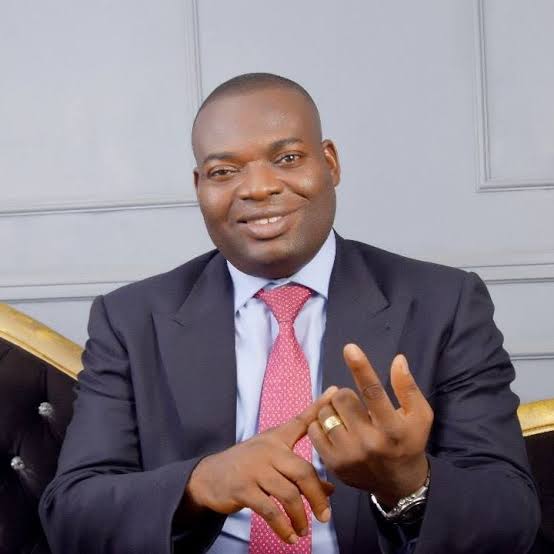
Senator Tony Nwoye, who represents Anambra North Senatorial District in the National Assembly, has moved a motion on the floor of the Senate calling for the urgent rehabilitation of the Onitsha–Iyiowa–Odekpe–Atani–
Distinguished Senator, what prompted your motion on the Ogbaru-Ndoni Highway?
The deplorable state of the road. This is a 70-kilometre federal highway that links the South-East to the South-South through Ogbaru, my constituency. A journey that should take one hour now takes two. My people are suffering.
How strategic is this road beyond Ogbaru?
Very strategic. It is not just a local road. It connects Anambra to Rivers State, serves the Ogbaru oil belt, and is a major artery for agriculture, commerce and oil and gas logistics. When it fails, the economy of two regions feels it.
Your motion quoted increased travel time. What is the real cost to users?
The cost is enormous. Drivers spend more on fuel, vehicles break down, traders lose time, farm produce rots in transit. Eventually, those costs are passed to the final consumer. It is inflation triggered by bad roads.
You said the road was built in the late 80s and abandoned since. Is that accurate?
Yes. It was partially constructed in the late 1980s. Since then, there has been no comprehensive rehabilitation. Just patchwork. That is decades of neglect for a road of such economic importance.
Are you not blaming past administrations unfairly?
I am stating a fact that must be verified by the Ministry of Works records. If there were interventions, let the records show them. But what my constituents experience daily is a failed road. That is what matters.
Your motion proposes two stages – palliative and comprehensive reconstruction. Why?
Because people are dying and vehicles are breaking down today. We cannot wait for a full reconstruction contract which may take a year to procure. Let FERMA do emergency palliative repairs now to save lives, while the Ministry prepares for full reconstruction.
You mentioned FERMA, Ministry of Works and South East Development Commission. Who should do the job?
That is for the Executive to decide. I mentioned the three to provide options. What is important is that an agency with the mandate and funding takes responsibility immediately. The Senate Committees on Works and Appropriation will ensure budget provision.
Many Senate motions never translate to action. How will yours be different?
That is a valid concern. That is why I demanded a timeline. I asked the Senate Committee on Works to inspect the road, engage stakeholders, and report back within four weeks with specific findings, cost implications and implementation plan. It creates accountability.
What should that four-week assessment focus on?
It must be technical, not political. Identify the most dangerous failed sections, check drainage and pavement failure, document safety hazards, and separate what needs emergency patching from what needs total reconstruction. And it must be made public.
You raised security concerns. How does a bad road cause insecurity?
When vehicles break down in isolated, flooded sections, especially at night, occupants become easy targets. Bad roads create forced checkpoints for criminals. A good road is also a security infrastructure.
Some say comprehensive reconstruction is too expensive in this economy?
What is more expensive is not reconstructing it. The losses in man-hours, vehicle repairs, and agricultural wastage in Ogbaru run into billions annually. Prevention is cheaper than the cost of failure. Funding can come through special intervention or Sukuk or other windows.
What role will host communities play?
The communities are ready. Transport unions, farmers, traders, traditional rulers have all cried out. They will support the assessment and even monitor the work. Ownership is key to protecting the road after rehabilitation.
Are you worried this will be reduced to just filling potholes?
That is my fear. That is why I emphasized engineering solutions. If you don’t fix drainage and erosion, the potholes will return in one rainy season. We need a durable job, not a cosmetic one.
Does this motion guarantee that work will start?
A motion alone does not guarantee funding or mobilization to site. It elevates the issue and puts the relevant agencies on notice. The real test is whether the Ministry of Works captures it in the budget, releases funds, and the contractor moves to site.
In one sentence, how will you measure success?
Success will not be measured by how many resolutions we pass in the Senate, but by whether a trader can move his goods from Atani to Onitsha in one hour, safely, without breaking his vehicle. When the road is motorable, we have succeeded.