










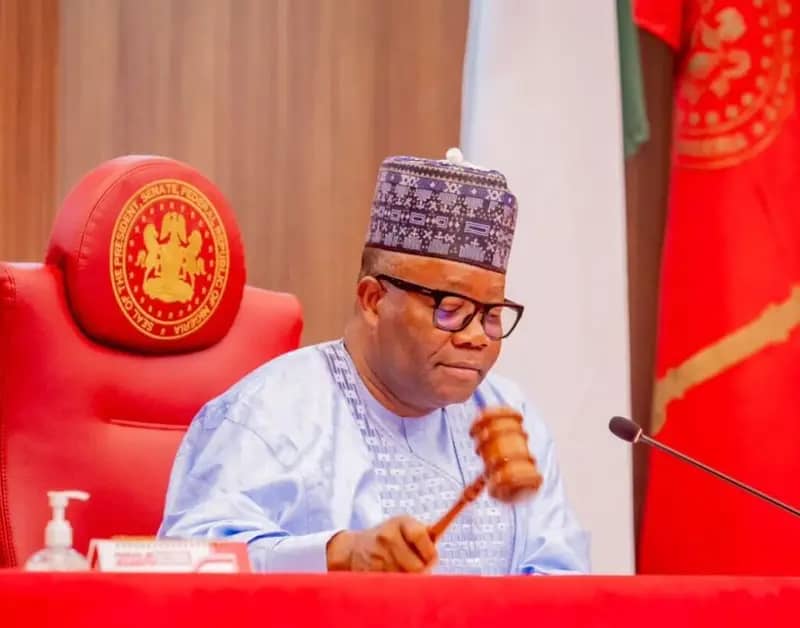
Our Senate Correspondent in this articles writes that when Senate President Godswill Akpabio paused the third reading of the Nigerian Coast Guard Bill for further consultations, he opened the door for a deeper national conversation. The Provisional Committee for the Proposed Nigerian Coast Guard has now stepped in with a blunt message: Nigeria already has duplication in its maritime sector, and a Coast Guard is the fix. The debate is no longer about whether to add another agency. It is about whether to finally consolidate decades of fragmented responsibility under one roof.
The Core Argument
PC-NCG says the evidence is clear — duplication already exists. Multiple agencies are performing Coast Guard duties separately, each with its own budget, logistics, and command. The bill seeks to end that.
How Duplication Works Today
According to the Committee, maritime safety, security, law enforcement, environmental protection, search and rescue, border control and protection of oil infrastructure are currently scattered across several institutions. That is the real overlap.
The Cost of Fragmentation
Each agency runs parallel structures. The result is duplicated spending, diffused accountability, and no single institution to coordinate operations or represent Nigeria internationally on Coast Guard matters.
The Fourth Pillar
The Committee frames the Coast Guard as the missing piece. Nigeria already has three active maritime security pillars. The proposed Coast Guard would complete the structure and provide unified command.
Reform, Not Expansion
PC-NCG insists this is not about creating a new bureaucracy. It is about rationalizing existing functions into one agency with one doctrine, one mandate, and one line of accountability.
Closing an Identity Gap
The statement notes a paradox: Nigeria performs Coast Guard functions every day, but has no Coast Guard institution. “The functions exist. The institution does not. The duties are performed. The identity is absent.”
International Implications
Without a legal Coast Guard, Nigeria loses visibility and leverage in regional and global maritime forums. Other coastal nations use a dedicated Coast Guard to coordinate policy, training, and partnerships.
Blue Economy Stakes
With an extensive coastline, inland waterways, major ports, and offshore oil and gas assets, Nigeria’s Blue Economy ambitions require a specialized institution to protect infrastructure and enforce regulations efficiently.
Efficiency and Accountability
A single Coast Guard, the Committee argues, will reduce waste, improve coordination, and make it easier to track performance and funding — something fragmented agencies cannot do.
Addressing Senate Concerns
The Senate raised duplication as a concern. PC-NCG’s response reframes it: the bill is the answer to that concern, not the cause. The consultation period is now an opportunity to examine structural facts.
Political Will Matters
The Committee welcomed the Senate’s openness to further dialogue. It urged lawmakers to focus on “existing structural realities, not merely on the name of the institution.”
Public Finance Angle
Rather than burdening public finance, PC-NCG says the Coast Guard will lead to more prudent use of resources by eliminating overlapping budgets and administrative overhead.
The Bigger Picture
For years, Nigeria has managed critical maritime duties in pieces. The bill proposes to manage them as a whole. That shift could improve response times, professionalism, and safety across the nation’s waters.
Conclusion
“The duplication is the problem. The Coast Guard is the solution.” That is PC-NCG’s closing pitch. Whether lawmakers accept it will determine if Nigeria continues with fragmented maritime management, or finally replaces it with unified accountability.