








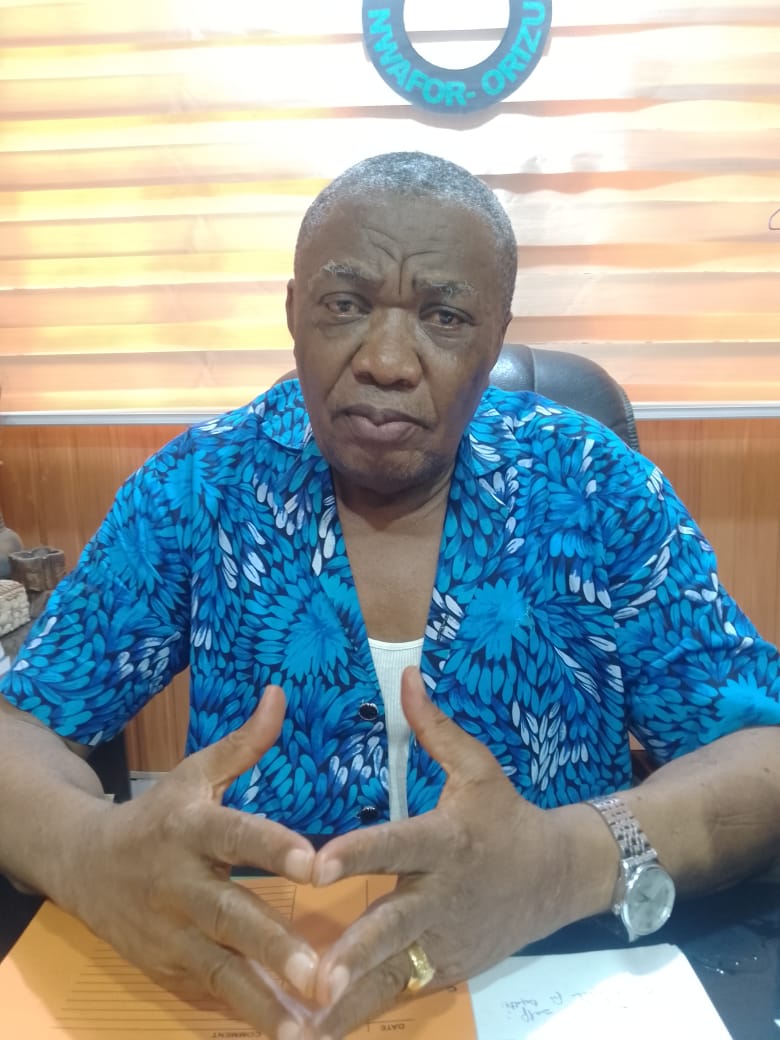
When First Lady Oluremi Tinubu suggested grants for women to start small trades like Akara frying, the comment triggered a wave of criticism online. But at a press conference in Abuja on recently, Prince Orji Nwafor-Orizu reframed the conversation, arguing that the outrage missed the point. His intervention highlights a larger debate in Nigeria: how to value informal businesses, and when empowerment becomes politics, analyses Ekuson Nw’Ogbunka, Our Managing Editor in Abuja, the Federal Capital Territory (FCT).
Prince Nwafor-Orizu, a lawyer and democracy advocate, began by defending the dignity of small trade. He said Akara business has lifted families, created jobs, and built houses in places like Nnewi, even as he stressed that the First Lady spoke of grants, not loans. For millions without collateral, that distinction matters. A grant can be the difference between staying idle and starting a livelihood.
Citing a woman employing 12 people in Akara drying, he argued that micro-enterprises are already engines of employment. Government support could only scale what already works. “Society cannot collapse into one business,” he said. His point was that a healthy economy needs farmers, traders, lawyers and doctors. The issue is performance, not prestige.
He suggested the First Lady should embrace the nickname, calling it a sign of grassroots connection. In politics, such branding can humanize leaders.
Where he drew the line was on campaign-related gifts. He said distributing vehicles and cows to APC women before campaigns open politicizes what should be a national program. Nwafor-Orizu reminded that the funds belong to all Nigerians, not one party. Excluding voters in other parties like ADC, NDC or PRP would undermine the presidency’s mandate. He invoked the symbolic role of the First Lady as mother of all, urging that interventions be inclusive and timed properly.
Asked if the Tinubu government fulfills promises, he avoided partisanship. Instead, he urged the administration to “actualize” the grant plan to build trust, suggesting that lawmakers could help identify genuine beneficiaries, grounding the program in communities.
On calls for musicians like Burna Boy to start foundations, he defended their right to private wealth. “They made their money, not government money,” he said, comparing Nigerian artistes to American actors and athletes, arguing that success should not be criminalized or politicized.
The debate however, reflects a slow shift toward recognizing Nigeria’s informal sector, which employs most women. Policy must meet people where they are.
Without proper targeting and monitoring, grants risk becoming token gestures. Nwafor-Orizu’s call for due process is a check against that.
Early distribution of gifts can be read as vote-buying. That perception could hurt both the program and the government.
By linking the First Lady to “Akara,” Nwafor-Orizu is trying to give the initiative cultural legitimacy, not ridicule.
As SAD President, his core message was inclusion: democracy works when benefits cut across party lines.
The test will be implementation. If grants reach real traders and avoid partisan capture, the “Akara saga” may become a case study in grassroots empowerment rather than controversy.