

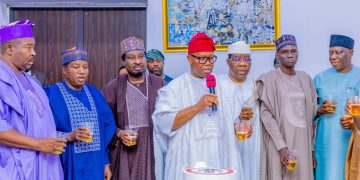









In a political terrain where criticism often drowns out delivery, Hon. Joshua Chinedu Obika’s three years in the Green Chamber have become a case study in how verified results collide with viral propaganda. Labeled by allies as “vilified but proven,” the AMAC/Bwari lawmaker’s record is now being thrust into the center of FCT politics ahead of 2027. For Hon Dr Ubasinachi, National President of the Grassroots Mandate Group Initiative, the facts on the ground are louder than the attacks online, reports our anchorman, Ekuson Nw’Ogbunka in Abuja.
From Gwarimpa Ward to National Stage
Obika’s political story did not start in Abuja’s power corridors. It began in 1998 as Councillor, Gwarimpa Ward, a grassroots role that supporters say shaped his approach to service. Over two decades, he built a reputation for backing aspirants across party lines with funds, strategy, and alliances. The constant, his camp insists, has been a pursuit of good governance, equity, and balanced representation.
The 2022 Pivot to Labour, Then NDC
Frustrated by what he called poor inclusivity in the FCT, Obika moved to the Labour Party in 2022. His backers claim he “almost single-handedly funded” LP structures from ward to state level, even though the party already had an elected senator in the territory. Internal legal disputes ahead of area council polls forced a rethink, and while others returned to old rivals, Obika aligned with the NDC.
Low-Profile Office, High-Impact Claims
As Deputy Chairman, National Assembly Library Commission, Obika’s office is not known for big budgets. Ubasinachi puts implementation at roughly ₦400 million over three years. Yet the list of projects attributed to him has become the core of his defense against critics who question his relevance.
Legislative Firsts for the FCT
Obika’s team points to five bills as proof of legislative intent: the Original Inhabitants Resettlement Bill, FCT Emergency Management Board Bill, FCT Scholarship Board Bill, Additional Mandate Secretary Bill seeking six more secretaries for the area councils, and the School of Nursing and Midwifery Bill to give legal backing to the Zuba institution. Supporters call it “unprecedented in FCT representation.”
Open-Field Empowerment and Public Scorecards
He is credited as the first FCT politician to conduct open-field empowerments and to publicly present a scorecard, daring constituents to “judge him by verifiable deeds.” The move, allies say, shifted the accountability bar in a constituency long used to closed-door politics.
Traditional Institutions and Education
The record lists official cars purchased for six indigenous kings in AMAC/Bwari, and vehicles distributed to non-indigenous chiefs for logistics. On education, over 70 students at the School of Nursing, Zuba, received tuition and accommodation scholarships — 30 from AMAC/Bwari, the rest drawn from other zones “for balance.” Principals in rebuilt or renovated schools got laptops and tech support alongside new ICT centres.
Infrastructure: Light, Power, Roads, Bridges
Solar street lights now dot estates and markets across AMAC/Bwari, according to the account. Transformers have gone to several Bwari communities. A road with street lights was constructed in Kubwa, and a connecting bridge is underway in Kagini to help children reach primary school safely. A palace was also built, furnished, and delivered for an indigenous chief in AMAC.
Health and Inclusion
Medical equipment was donated to Maitama District Hospital and other FCT facilities. Promises to top medical students were “fulfilled,” wheelchairs and assistive devices went to Persons Living With Disabilities, and a ₦2,500 Medical Insurance Policy Scheme was recently introduced for residents of AMAC and Bwari.
The Vilification Question
Why the attacks? Ubasinachi’s answer is blunt: “Because his record cannot be faulted.” The argument is that Obika’s three-year output towers above the cumulative performance of past AMAC/Bwari reps. “All projects, beneficiaries, bills, and scorecards are verifiable — go and check,” the statement reads. Critics, it says, resort to “hired jobbers and media propaganda” because they cannot challenge the delivery.
The Inclusivity Pitch
Obika’s platform rests on a dual track: greater inclusion for FCT indigenes and fair balance for non-indigenes who, by INEC’s figures, make up over 78% of voters and contribute over 95% of taxes, IGR, and labour. The message is that FCT politics can no longer be a “preserve for entitled landlords” cycling through council, House, and Senate seats.
The 2027 Warning
The statement delivers a reality check to parties: any platform that fails the inclusivity test will struggle in 2027. With the FCT’s demographic and economic weight, Obika’s camp is betting that performance and balance will trump recycled names and land politics.
Verifiability as a Weapon
“Only a tree with good fruits attracts stones,” the statement notes. By listing projects down to bridges, transformers, and scholarship slots, Obika’s allies are turning verifiability into a campaign tool. The dare is simple: visit the schools, count the lights, speak to the beneficiaries.
A Rep’s Definition of Duty
For Obika’s defenders, representation is more than motions and plenary attendance. It is cars for traditional rulers, ICT labs for students, insurance for families, and bills that restructure FCT governance. Whether that definition sticks with voters depends on how many can trace the projects to their streets.
The Final Word
“What God has elevated, no amount of propaganda can pull down,” Ubasinachi concludes. In AMAC/Bwari, the battle ahead of 2027 may be less about noise and more about footprints. Hon. Joshua Chinedu Obika is betting that his are already on the ground.