





Senate President calls for constitutional knowledge, factual accuracy and responsible scrutiny as journalists confront the challenge of unlawful budget insertions, writes Ekuson Nw’Ogbunka Our Managing Editor.
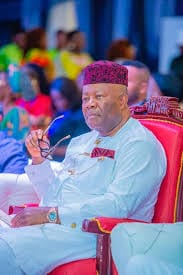
The quality of parliamentary journalism in Nigeria may ultimately determine how effectively citizens understand the decisions taken in their name, the resources committed to public expenditure and the extent to which elected representatives are held accountable. This was the underlying message of the President of the Senate, Senator Godswill Akpabio, when he challenged journalists covering the National Assembly to set the highest standards of parliamentary reporting in the country.
Akpabio delivered the charge at the 2026 Capacity-Building Workshop organised by the Senate Press Corps, where he urged parliamentary correspondents to deepen their understanding of the Constitution, master the rules governing the legislature and uphold professional standards capable of withstanding public and institutional scrutiny.
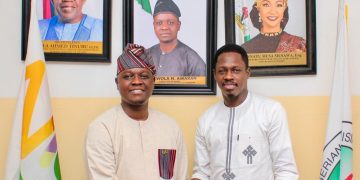
Represented by the Chairman of the Senate Committee on Media and Public Affairs, Senator Yemi Adaramodu, the Senate President spoke against the backdrop of the workshop’s theme: “Leveraging Legislative Oversight and Media Collaboration to Safeguard the National Budget from Unlawful Insertions.”
The theme places parliamentary journalism at the intersection of legislative accountability, public finance management and democratic governance.
At a time when public expenditure is central to national development, economic recovery and the delivery of essential services, the ability of journalists to explain budgetary decisions accurately and investigate questionable allocations is more than a professional obligation. It is an important component of democratic accountability.
Akpabio’s message, therefore, raises a fundamental question: how can parliamentary journalism help ensure that public funds are allocated transparently, appropriated lawfully and spent for the benefit of Nigerians?
Parliament and the Press: A Shared Democratic Responsibility
In his address, Akpabio described the workshop’s theme as one that goes to the heart of representative government.
“Parliament must guard the public purse, the press must illuminate the public record and both must answer to the Nigerian people from whom all public authority comes,” he said.
The statement captures the complementary responsibilities of the legislature and the media in a democratic system.
The National Assembly exercises legislative authority, considers national budgets and performs oversight functions over ministries, departments, agencies and other institutions of government. The media, on its part, informs citizens about legislative decisions, examines public policies and draws attention to developments that may otherwise escape public scrutiny.
However, the relationship between the two institutions must not be mistaken for an arrangement in which journalists are expected to protect the image of the legislature at the expense of their watchdog responsibilities.
Effective collaboration should improve access to information, promote a better understanding of parliamentary procedures and encourage accurate reporting. It should not weaken the independence of journalists or discourage critical examination of legislative conduct.
Indeed, the more important the decisions taken by parliament, the greater the need for independent reporting capable of explaining both achievements and shortcomings.
The challenge before Senate correspondents is to maintain a professional relationship with lawmakers while preserving sufficient independence to question their actions, examine their claims and investigate issues of public interest.
Unlawful Budget Insertions: The Accountability Question
The workshop’s focus on safeguarding the national budget from unlawful insertions places particular responsibility on journalists covering the budget process.
A national budget is not merely a collection of figures presented by the executive and approved by the legislature. It is a financial statement of government priorities, reflecting decisions about public revenue, expenditure and development objectives.
When budgetary provisions are altered, introduced or expanded during the legislative process, the public has a legitimate interest in understanding who proposed the changes, what they are intended to achieve, whether they followed established procedures and how they affect national priorities.
It is important, however, to distinguish between lawful legislative amendments and unlawful or improperly introduced provisions. The mere presence of a new project or an amended allocation in an approved budget does not, by itself, establish wrongdoing.
That Distinction Makes Careful Journalism Indispensable
Reporters must be prepared to examine budget documents, compare proposals with approved appropriations, identify the agencies responsible for particular allocations and seek explanations from the relevant authorities.
Where discrepancies emerge, journalists should investigate them, obtain supporting documentation and give affected institutions a fair opportunity to respond before drawing conclusions.
Such an approach would help prevent legitimate questions about public expenditure from being lost in political accusations, speculation or sensational headlines.
It would also make it more difficult for genuine cases of financial irregularity to be dismissed as mere political propaganda.
For parliamentary journalism to contribute meaningfully to budget transparency, reporters must move beyond announcing the passage of appropriation bills and begin explaining the implications of budgetary decisions for ordinary Nigerians.
Why Constitutional and Procedural Knowledge Matters
Akpabio’s call for journalists to know the Constitution and the rules of the institution they cover addresses one of the fundamental requirements of specialised reporting.
Parliamentary proceedings are governed by constitutional provisions, legislative rules, established procedures and institutional practices. A reporter who lacks sufficient knowledge of these frameworks may misunderstand the significance of a motion, misinterpret a legislative decision or attribute powers to an institution that it does not possess.
The consequences can be serious.
An inaccurate report about a committee hearing, a legislative amendment or the passage of a bill can distort public understanding and potentially damage the credibility of both the journalist and the media organisation involved.
Constitutional literacy is particularly important when reporting legislative oversight. Journalists must understand the difference between the powers of the legislature, the responsibilities of the executive and the functions of independent institutions.
They must also be able to distinguish allegations made during parliamentary proceedings from established findings and final decisions.
This requires more than the ability to write quickly or produce attractive headlines. It demands research, documentary verification, knowledge of legislative procedure and a willingness to seek clarification when information is incomplete.
The Senate Press Corps workshop offers an opportunity to strengthen these professional competencies and encourage a culture in which accuracy takes precedence over speed.
The Cost of Sensational Journalism
Akpabio also warned against the professional temptation to prioritise sensational claims over careful verification.
He observed that sensational claims often receive immediate attention, while corrections may reach fewer people.
“Nigeria needs reporting strong enough to withstand scrutiny. We face real hardships and disagreements, and the public deserves facts that help us confront them,” he said.
His observation reflects a challenge confronting contemporary journalism, particularly in an information environment where online platforms reward speed, emotional reactions and highly shareable content.
A headline alleging misconduct may travel widely before the facts are established. A subsequent correction, even when prominently published, may never reach the same audience.
For journalists covering the National Assembly, the pressure can be especially intense because parliamentary proceedings frequently involve partisan disagreements, contentious policy decisions and competing political interests.
Nevertheless, the need to attract readers cannot justify publishing unverified allegations as established facts.
Responsible journalism requires reporters to distinguish between what lawmakers say, what documentary evidence establishes and what independent investigation has confirmed.
Where facts remain uncertain, that uncertainty should be made clear.
Such discipline does not mean avoiding difficult stories or shielding public officials from criticism. Rather, it strengthens investigative reporting by ensuring that allegations are supported by evidence and that published conclusions can withstand scrutiny.
A journalist who verifies a claim before publication is not necessarily less courageous than one who publishes it immediately. In many cases, verification is what makes the journalist’s work credible and effective.
Truth-Telling as an Act of Patriotism
Akpabio’s address also presented journalism as a responsibility that combines national interest with professional independence.
“Exposing failure can be an act of service to the Nation. So can resisting the temptation to present conjecture as fact. Patriotism asks us both to tell the truth about our country and to care what happens to it,” he said.
The statement offers a useful basis for examining the relationship between patriotism and public-interest journalism.
Patriotism should not be interpreted as an obligation to conceal institutional weaknesses, avoid criticism of public officials or portray every government policy in a favourable light.
Rather, a journalist serves the national interest by providing citizens with reliable information, exposing wrongdoing where evidence supports it and explaining policies in ways that promote informed public debate.
Equally, professional independence does not give journalists permission to disregard verification, fairness or the potential consequences of publishing false information.
The challenge is to combine courage with responsibility. Journalists must be willing to investigate uncomfortable questions while remaining committed to evidence. They must be prepared to scrutinise institutions without assuming that every accusation is true.
That balance is particularly important in a politically divided environment, where information can easily become a weapon in partisan contests.
Expert Contributions and the Search for Better Reporting
The workshop brought together public finance, civil society, media and legislative accountability perspectives through presentations by the Minister of Budget and Economic Planning, Senator Abubakar Atiku Bagudu; the Director of BudgIT, Mr Oluseun Onigbinde; the Executive Director of the Civil Society Legislative Advocacy Centre (CISLAC), Mallam Auwal Musa Rafsanjani; and the Publisher of Eagle Times Newspaper, Mr Ikechukwu Chukwunyere.
Their participation provided an opportunity to examine the relationship between budget formulation, legislative scrutiny, public accountability and the media’s responsibility to explain government spending.
The inclusion of civil society and public finance perspectives is particularly significant because budget reporting requires specialised knowledge that extends beyond the daily coverage of plenary sessions.
Journalists need to understand how budget proposals are prepared, how allocations are examined and approved, how public funds are released and how expenditure is monitored.
They also need to identify credible sources of budget information and learn how to interpret financial documents without losing sight of the human consequences of public spending.
For example, the significance of an allocation cannot always be understood by examining its monetary value alone. Reporters may need to establish the project’s intended beneficiaries, implementation timetable, responsible agency and relationship with existing programmes.
Similarly, an unexplained difference between proposed and approved expenditure may justify further investigation, but it does not automatically prove that funds have been diverted or unlawfully allocated.
The task of the journalist is to establish what happened, explain why it matters and present the available evidence fairly.
Beyond Workshops: The Need for Institutional Commitment
While capacity-building workshops can improve professional knowledge, their long-term value depends on whether participants apply what they learn in their daily work.
Media organisations must invest in specialised reporting, provide journalists with adequate research time and encourage the use of primary documents in news production.
Editors also have a responsibility to ensure that headlines accurately reflect the contents of reports and that allegations are not presented as established facts merely to attract traffic.
The Senate Press Corps and other professional journalism bodies can support this process by promoting continuous training, sharing reporting resources and encouraging peer review of complex parliamentary stories.
Public institutions, for their part, should make relevant information accessible, respond to legitimate questions and avoid treating critical reporting as an act of hostility.
Transparency becomes meaningful when information is available in forms that citizens and journalists can examine, understand and independently verify.
The effectiveness of legislative oversight also depends on the willingness of responsible institutions to investigate credible findings and address identified weaknesses.
Journalism can expose problems and inform the public, but it cannot replace the legal and administrative processes required to establish responsibility and enforce accountability.
Conclusion: The Standard Must Be Measured by Results
Akpabio’s challenge to Senate reporters is timely because the credibility of parliamentary journalism depends not only on what journalists publish but also on how carefully they establish the facts behind their reports.
The real test of the 2026 Capacity-Building Workshop will be whether it produces better-informed reporting, more rigorous examination of public expenditure and clearer explanations of legislative decisions.
If parliamentary correspondents develop stronger constitutional knowledge, improve their ability to analyse budgets and resist the pressure to publish unverified claims, they will be better positioned to serve the public interest.
But raising standards must also mean being prepared to ask difficult questions of the legislature itself.
A press that merely reproduces official statements cannot fully illuminate the public record. Equally, a press that substitutes speculation for evidence cannot reliably hold public institutions accountable.
Nigeria needs parliamentary journalism that can do both: scrutinise power fearlessly and report facts responsibly.
Ultimately, safeguarding the public purse is not the responsibility of parliament alone. It requires effective oversight, transparent public institutions, informed citizens and an independent media capable of explaining how public resources are managed.
The standard Akpabio has called for will be achieved not by declarations at workshops but by the quality, independence, accuracy and public value of the journalism that follows.