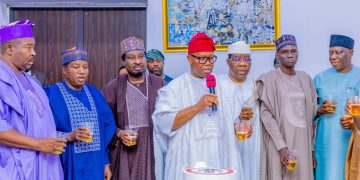



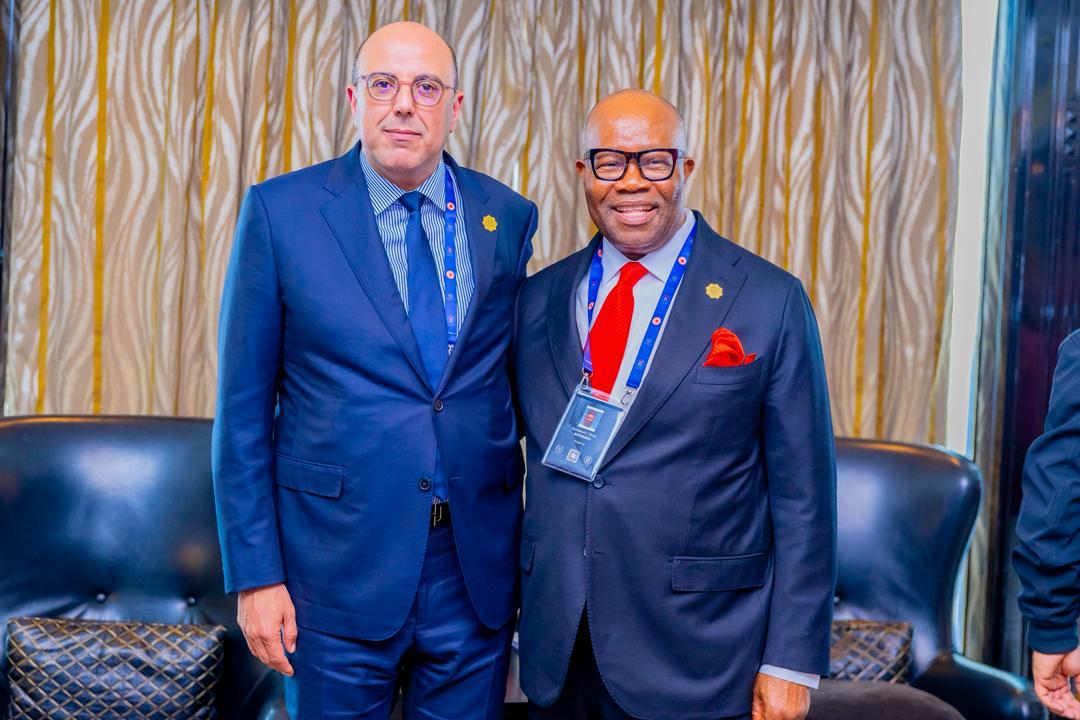
Senate President Godswill Obot Akpabio has reaffirmed Nigeria’s commitment to strengthening bilateral and parliamentary relations with Senegal and Morocco, following separate engagements on the sidelines of the 152nd Assembly of the Inter-Parliamentary Union (IPU) in Istanbul, Turkey.
The meetings were disclosed in a press release issued on Saturday by Jackson Udom, Special Adviser to the Senate President on Media and Publicity.
With Senegal, Akpabio received Speaker Amadou Mame Diop and his delegation, describing both countries as “brother nations bound by history, culture, and a shared destiny.” He called for closer collaboration between their legislatures to advance democratic governance and regional stability.
He highlighted Nigeria’s leading role in West African conflict resolution, citing interventions in Guinea-Bissau, and restated the country’s readiness to work with Senegal and other partners to sustain peace and strengthen democratic institutions. He also underscored the centrality of Nigeria’s bicameral legislature to its democratic process.
Akpabio praised the emergence of a new generation of African leaders, describing Diop as part of a dynamic, forward-looking leadership redefining governance on the continent. Diop, in response, reaffirmed Senegal’s commitment to the “historic and strategic” relationship with Nigeria, citing shared cultural, linguistic, and ethnic connections while commending Nigeria’s leadership in Africa.
The Senegalese Speaker identified significant economic opportunities, especially in energy, noting Senegal’s recent entry into oil production and the chance to tap Nigeria’s experience. He also pointed to the growing presence of Nigerian investors in Senegal as evidence of strong bilateral economic ties.
Both leaders stressed stronger cooperation within ECOWAS, arguing that regional integration, economic collaboration, and institutional stability are critical to Africa’s progress. They called for greater West African connectivity, improved trade linkages, and deeper cooperation in agriculture, infrastructure, and energy to build resilience and self-reliance.
Akpabio reiterated Nigeria’s commitment to promoting democracy, safeguarding constitutional order, and supporting regional peace initiatives. He urged renewed efforts to overcome historical divisions and build a more united, integrated West Africa, and extended a formal invitation to Diop to visit Abuja.
On Morocco, Akpabio held a high-level parliamentary meeting with a delegation led by Head of Parliament Rachid Talbi Alami. He described Nigeria-Morocco ties as rooted in shared history, mutual respect, and a collective vision for progress. “Whether or not we have formal matters to discuss, meetings between Nigeria and Morocco are always significant. They represent the renewal of a bond of friendship that transcends our individual tenures in office,” he said.
He conveyed greetings to His Majesty, the King of Morocco, and commended the Kingdom’s stability, peaceful disposition, and developmental strides, calling Morocco a model for other African nations. Akpabio also restated his IPU message on sovereignty: “Might should not be right. When the sovereignty of nations is undermined, no nation is truly safe.” Alami welcomed the engagement, citing momentum since the 2016 Royal Visit to Nigeria, and urged deeper parliamentary dialogue and exchange. Both sides agreed parliamentary diplomacy is vital for mutual understanding, regional integration, and sustainable development, pledging sustained high-level interactions for the benefit of both nations and the broader African community.