










By Newsmaker Media in Abuja
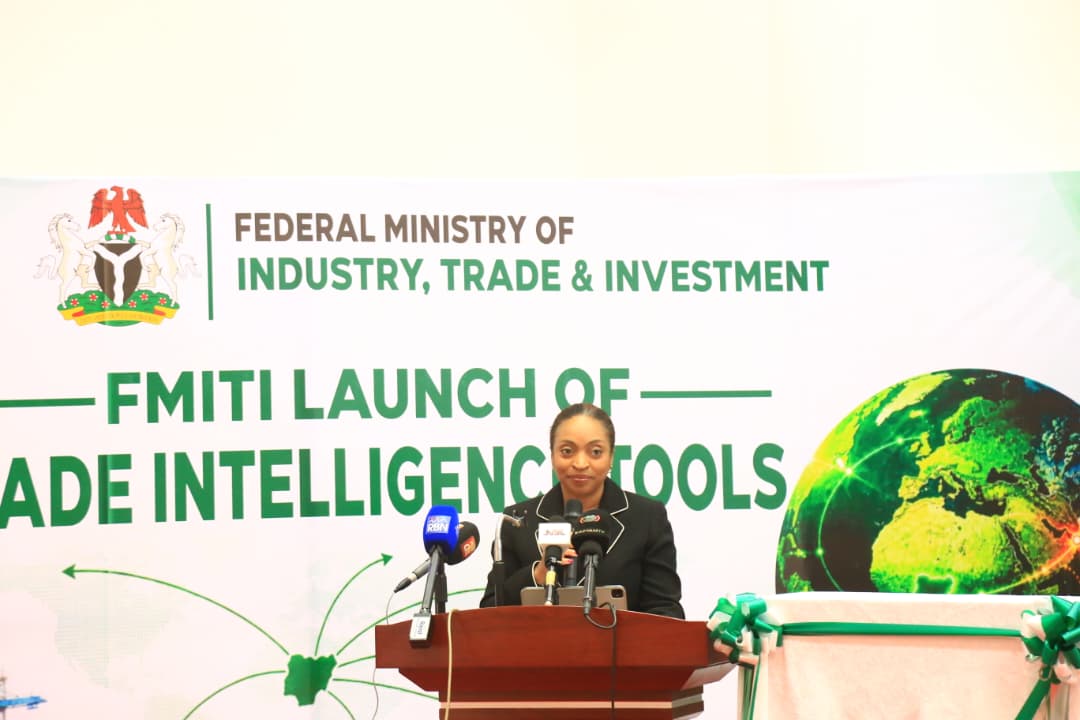
The Federal Government has launched new trade intelligence tools aimed at helping Nigerian businesses break into international markets, attract investors and contribute to the country’s ambitious $1 trillion economy target by 2030.
The initiative, unveiled by the Federal Ministry of Industry, Trade and Investment (FMITI) in Abuja, is designed to give businesses access to practical market information that can help them identify export destinations, understand foreign trade requirements, locate potential buyers and make better commercial decisions.
Speaking at the launch, the Minister of Industry, Trade and Investment, Dr. Jumoke Oduwole, said the tools would particularly benefit micro, small and medium-sized enterprises (MSMEs), which need reliable information to compete in an increasingly demanding global marketplace.
Oduwole said the success of Nigeria’s economic reforms should be measured by their impact on production, exports, industrial development and job creation. She maintained that the country must move beyond policy announcements to tangible outcomes that improve the productive capacity of businesses.
The minister identified high operating costs, limited access to finance, logistics difficulties and complicated trade procedures as obstacles holding back Nigerian enterprises. She stressed that addressing these challenges was essential to improving competitiveness and ensuring that investments translated into operational projects, industrial expansion and decent jobs.
She also highlighted reforms involving the Export Expansion Grant Scheme, Free Trade Zones and Nigeria’s trade negotiation framework. The minister announced that CANEX WKND 2026, scheduled for November 5 to 8 at the National Theatre, Lagos, would provide opportunities for Nigeria’s creative industries to connect with international buyers, investors and business partners. Approximately 10,000 participants are expected at the event.
Earlier, the ministry’s Permanent Secretary, Dr. Chris Osa Isokpunwu, described trade intelligence as a critical resource for effective policymaking, business development and trade facilitation. He called on the ministry’s departments and agencies to integrate the tools into their operations to improve coordination, accountability and service delivery.
The newly unveiled initiative builds on the inaugural edition introduced in November 2025. It includes the 2026 Trade Intelligence Report, which reviews trade and investment developments in 2025, as well as a report covering performance in the first half of 2026. The publications examine export and import trends, investment inflows, global economic developments, regional trade, international agreements and the effects of government policies.
The launch also featured a presentation on the Road to CANEX, a live demonstration of the Trade Intelligence Portal and an interactive session. While the tools are expected to improve access to market intelligence, their broader impact will depend on how effectively businesses use the information and whether complementary reforms reduce production costs, improve financing and ease trade-related bottlenecks.